Financial Stress Indicators
Financial Stress Level: Watchful
VIX: 26.8 | HY Spread: 5.20% | SOFR: 4.55% | Yield Curve: 0.51%
Market Fear (VIX)
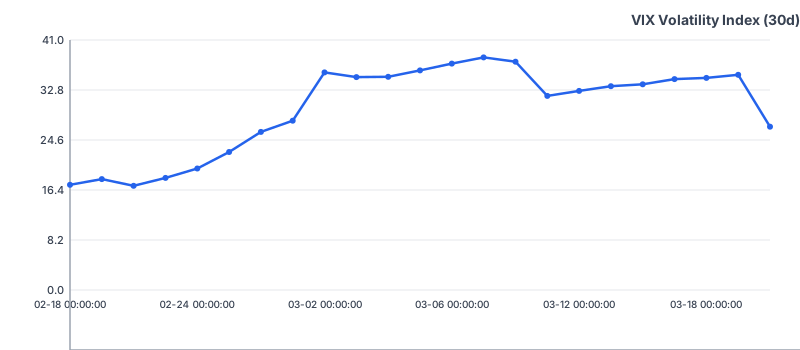
Elevated uncertainty (26.8). Above-average hedging demand. Market is nervous but not in full risk-off mode.
VIX Reference
- < 20: Normal volatility — markets comfortable
- 20–30: Elevated uncertainty — hedging demand rising
- > 30: High fear — significant risk repricing
- > 40: Extreme panic — forced deleveraging, liquidity stress
Credit Stress (High-Yield Bond Spread)
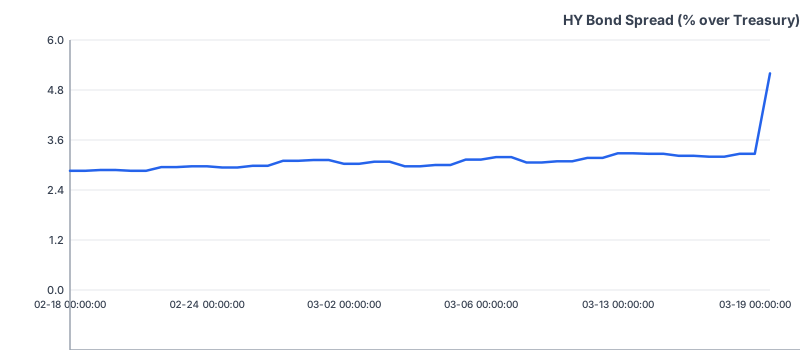
Elevated (5.20%). Investors demanding significant risk premium for corporate credit.
The high-yield (HY) spread measures the premium investors demand to hold junk bonds over equivalent Treasuries. Wider spreads = more fear of corporate defaults = tighter financial conditions = slower economic growth.
HY Spread Reference
- 3–4%: Normal — credit markets open
- 4–6%: Elevated — companies paying up for debt
- >6%: Crisis territory — some borrowers effectively locked out
- 2008 peak: ~21% | 2020 COVID peak: ~10.8%
Yield Curve (10Y–2Y Treasury Spread)
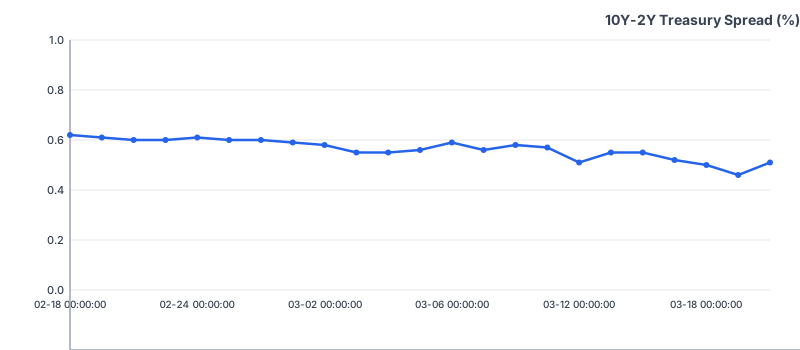
Positive (0.51%). Normal slope, no inversion signal.
An inverted yield curve (negative spread) has preceded every US recession since 1955. The signal triggers when the curve inverts; the recession typically follows 6–18 months later. Re-steepening from inversion often means the recession has already begun.
Interbank Lending (SOFR)
| Date | SOFR Rate |
|---|---|
| 2026-03-20 | 4.5500% |
| 2026-03-19 | 3.6200% |
| 2026-03-19 | 3.6200% |
| 2026-03-18 | 3.6200% |
| 2026-03-18 | 3.6200% |
| 2026-03-17 | 3.6500% |
| 2026-03-17 | 3.6500% |
Spikes in SOFR signal stress in short-term funding markets — banks tightening lending to each other. SOFR replaced LIBOR as the key dollar interbank benchmark in 2023.
Policy Rates
| Central Bank | Rate | Context |
|---|---|---|
| Federal Reserve (Fed Funds) | 4.50% | Key: hike = risk recession; hold = risk inflation |
| European Central Bank | 3.65% | EUR fuel prices sensitive to ECB policy via EUR/USD |
Last updated: 2026-03-20 | Sources: FRED (Federal Reserve Bank of St. Louis), API Ninjas