Oil Prices
Current Prices
Brent $110.61 | WTI $106.68 | Dubai $110.61 | +9.5% vs 7d ago
Brent Crude — 30-Day History
xychart-beta
    title "Brent Crude (USD/bbl)"
    x-axis ["02-21", "02-25", "03-02", "03-06", "03-11", "03-15", "03-20"]
    y-axis "USD/bbl" 0 --> 122
    line [89.29, 89.41, 77.24, 100.01, 90.98, 105.08, 109.8]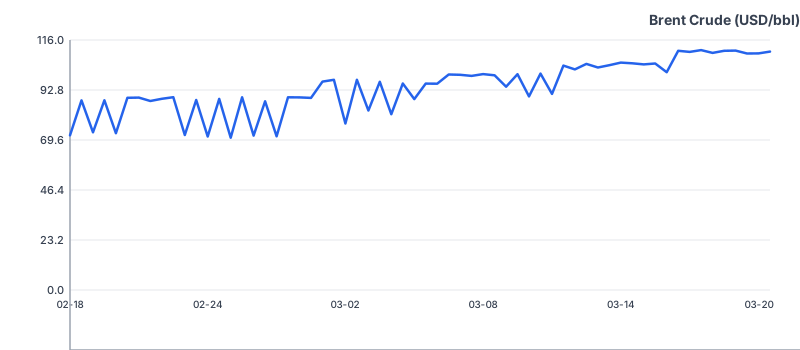
WTI Crude — 30-Day History
xychart-beta
    title "WTI Crude (USD/bbl)"
    x-axis ["02-21", "02-25", "03-02", "03-06", "03-11", "03-15", "03-20"]
    y-axis "USD/bbl" 0 --> 118
    line [86.25, 84.96, 71.13, 96.66, 86.8, 101.62, 107.51]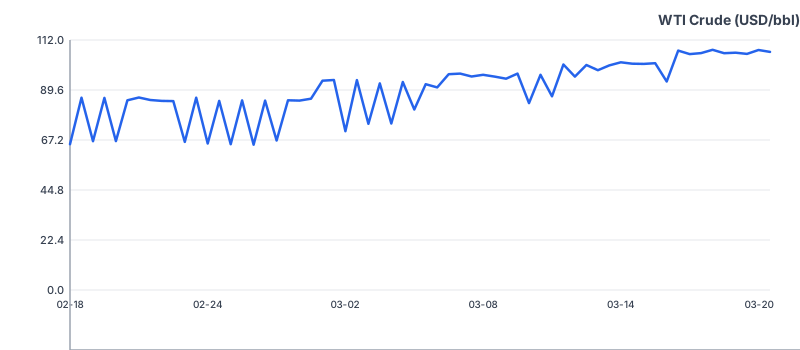
Recent Price Data
| Date | Brent | WTI |
|---|---|---|
| 2026-03-20 | $110.61 | $106.68 |
| 2026-03-19 | $109.75 | $105.79 |
| 2026-03-18 | $110.98 | $106.09 |
| 2026-03-17 | $111.31 | $106.13 |
| 2026-03-16 | $110.97 | $107.27 |
| 2026-03-15 | $105.08 | $101.62 |
| 2026-03-14 | $105.18 | $101.37 |
| 2026-03-13 | $104.31 | $100.61 |
Oil Market News
- 2026-03-23 — Ukraine strikes key Russian oil port and refinery Ukrainian forces struck a major Russian oil port and refinery, likely disrupting crude oil export flows and refined product output from one of the world's largest petroleum producers. The attack threatened to tighten global oil supply at a time when markets were already strained by the Hormuz closure, potentially adding upward pressure on Brent and diesel prices. Reduced Russian refining capacity could further constrain European diesel and fuel oil supply chains, compounding existing logistical challenges from rerouted shipping.
- 2026-03-23 — Which countries have strategic oil reserves – and how much? Strategic petroleum reserves held by IEA member nations — led by the United States, China, Japan, and South Korea — served as a critical buffer against supply shocks, with the IEA coordinating a 400-million-barrel emergency release in March 2026 following the Strait of Hormuz closure. The size and drawdown rate of these reserves directly influenced how long consuming nations could withstand disrupted flows from the Persian Gulf, which previously handled roughly 20% of global oil transit. Market watchers tracked reserve levels closely, as depleting stockpiles without restored supply risked a second price spike once buffers ran thin.
- 2026-03-23 — Oil falls and shares rebound after Trump says talks have been held to end war Oil prices declined as markets interpreted Trump's claim of ongoing peace talks as a potential path toward de-escalation in the Iran conflict, which could eventually restore disrupted crude supply flows through the Strait of Hormuz. Equity markets rebounded on the same optimism, with investors rotating back into risk assets on hopes that diplomatic progress might ease the geopolitical premium embedded in energy prices. If talks materialize into a credible ceasefire framework, the war risk premium on oil — currently driven by Hormuz closure and Gulf infrastructure damage — could unwind significantly, pulling fuel and fertilizer costs lower in turn.
- 2026-03-23 — Ecuador’s Broken Oil Industry Faces Violent Headwinds Ecuador's oil production, already struggling with aging infrastructure and underinvestment, faced further threats from escalating violence and criminal activity targeting energy operations. The disruptions risked reducing output from a country producing roughly 480,000 barrels per day, tightening Latin American crude supply at a time when global markets were already strained by the Hormuz crisis. For market watchers, any sustained drop in Ecuadorian exports would add incremental pressure to light sweet crude benchmarks and complicate refinery sourcing for US Gulf Coast processors.
- 2026-03-23 — Are Markets Underestimating the Risk of a Prolonged Energy Crisis? Market analysts warned that current commodity pricing may not fully reflect the duration and severity of ongoing energy supply disruptions, particularly given the vulnerability of key chokepoints like the Strait of Hormuz and the slow pace of infrastructure repair in the Persian Gulf. Prolonged supply constraints risked sustained elevation in crude oil benchmarks, with knock-on effects through refining margins, fertilizer production costs, and global food price indices. The disconnect between futures curves and physical market premiums suggested traders were pricing in a faster resolution than supply-chain fundamentals supported.
Last updated: 2026-03-23